+233 (0) 303 970 273 info@gawest.gov.gh GW-0007-2370

+233 (0) 303 970 273 info@gawest.gov.gh GW-0007-2370

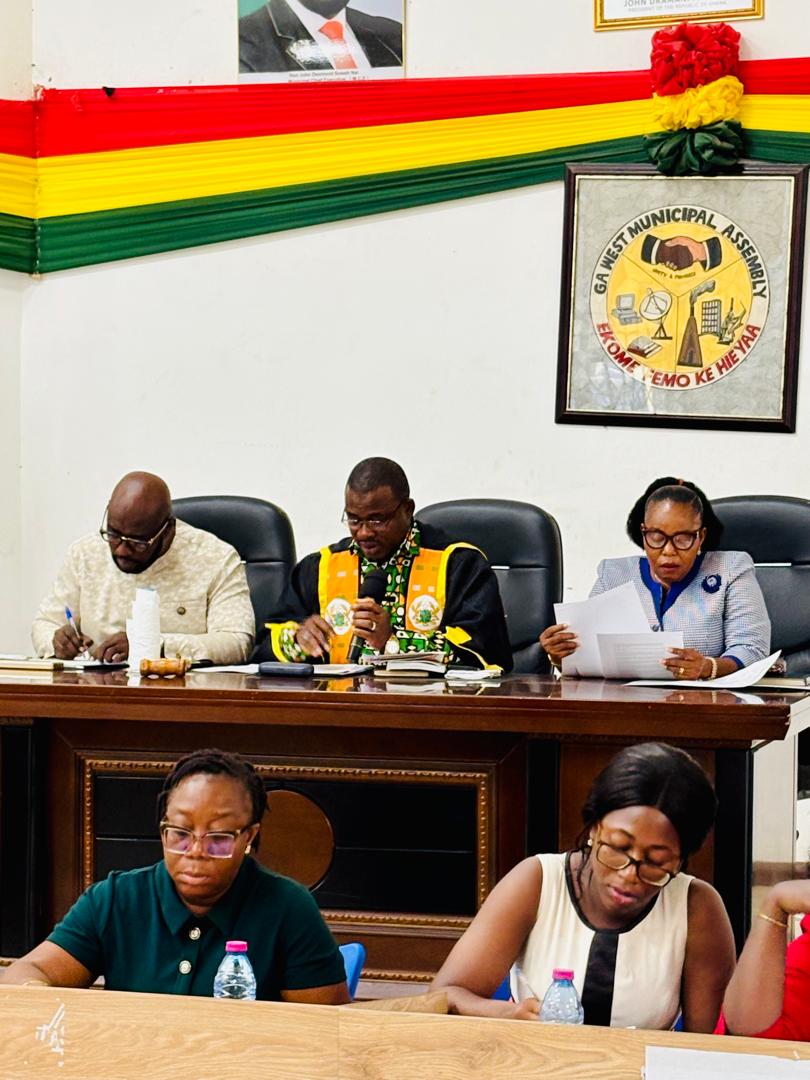
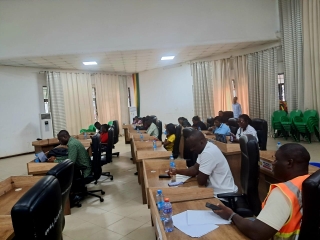
The Ga West Municipal Assembly held its First Ordinary Meeting of the Third Session of the Ninth General Assembly on Wednesday, 29th April 2026, at the Ga West Municipal Assembly Hall, with key stakeholders reviewing the Assembly’s performance and outlining strategies to accelerate development.
The meeting, chaired by Presiding Member Hon. Emmanuel M.K. Amuzu, brought together Assembly Members, Municipal Chief Executive, Member of Parliament for Amasaman Constituency, Heads of Departments, and other stakeholders to deliberate on governance, infrastructure, revenue mobilization, and social services.
Delivering the Sessional Address, Municipal Chief Executive John Desmond Sowah Nai emphasized that the Assembly remains committed to aligning its development agenda with the national vision of John Dramani Mahama, focused on “Building Prosperity and Restoring Hope.”
He noted that the Municipality continues to experience relative peace and stability, although concerns like theft, land disputes, and chieftaincy conflicts persist. He highlighted a recent disturbance at the Adjen Kotoku Onion Market, which disrupted trading activities but has since been brought under control through the intervention of security agencies.
On financial performance, the MCE disclosed that the Assembly mobilized GH¢8.09 million as of March 2026, representing 11.1% of its total annual budget. Internally Generated Funds (IGF) stood at GH¢3.45 million, achieving 34.5% of the projected target for the period. He assured Members that new revenue strategies, including digital payment systems and property revaluation, would be intensified to improve performance.
The Assembly also reported significant progress in infrastructure development. Several school and health projects across the Municipality are at various stages of completion, including classroom blocks, CHPS compounds, and borehole installations aimed at improving access to education, healthcare, and potable water.
In the health sector, the Municipality recorded increased outpatient attendance and improvements in maternal healthcare services. However, the MCE expressed concern over inadequate medical personnel, revealing that the Municipal Hospital currently has only eight doctors instead of the required minimum of fifteen. He proposed special initiatives, including community-supported recruitment of doctors and blood donation campaigns.
The education sector saw improvements in enrolment and supervision, although challenges such as inadequate infrastructure, furniture shortages, and teacher deficits remain. Efforts are ongoing to address these gaps through ongoing and planned projects.
In agriculture, the Assembly implemented the government’s “Nkoko Nkitinkiti” poultry programme, distributing over 6,600 birds to beneficiaries despite initial challenges, including a high mortality rate during the pilot phase.
The Department of Social Welfare and Community Development also reported progress in implementing the LEAP programme and supporting persons with disabilities, while intensifying community sensitization efforts across the Municipality.
During deliberations, Assembly Members raised concerns over staff welfare, revenue expenditures, and project omissions in the Sessional Address. A motion to suspend proposed salary increments for IGF staff until proper procedures are followed was adopted and referred to the Finance and Administration Sub-Committee.
Members also called for equitable distribution of development projects, including streetlights and boreholes, to ensure all electoral areas benefit fairly.
Executive Committee Report Highlights
Presenting the Executive Committee’s report, the MCE indicated that the Assembly generated GH¢8.09 million out of a budget of GH¢72.89 million as of March 2026, representing 11.1% performance. Internally Generated Funds (IGF) stood at GH¢3.45 million, achieving 34.46% of the annual target.
Total expenditure for the first quarter amounted to GH¢12.15 million, representing 16.67% of the annual budget, with the largest share spent on compensation.
The Executive Committee made several key recommendations aimed at improving governance and service delivery. These include:
The Committee also emphasized social and infrastructural improvements, including:
Additionally, the Committee called for improved operational efficiency through regular updates on fuel supply for DRIP machines, the timely release of funds to the Agriculture Department, and training for task force personnel to enhance coordination with Assembly Members.
Sector Performance and Development Efforts
The Assembly reported progress in infrastructure development, including ongoing construction of schools, health facilities, and boreholes to improve access to essential services.
In the health sector, increased outpatient attendance and improved maternal healthcare services were recorded, although challenges such as inadequate medical personnel persist. The MCE disclosed that the Municipal Hospital currently has only eight doctors, far below the required number.
The education sector saw improved enrolment and supervision, while agriculture benefited from the government’s “Nkoko Nkitinkiti” poultry initiative, which supported local farmers despite initial challenges.
Social protection programmes, including LEAP and support for persons with disabilities, were also expanded, alongside intensified community sensitization efforts.
Key Decisions and Way Forward
During deliberations, Assembly Members raised concerns about staff welfare, revenue management, and equitable distribution of development projects. A motion to suspend proposed salary increments for IGF staff until due process is followed was adopted and referred to the Finance and Administration Sub-Committee.
The Assembly concluded with a renewed
commitment to strengthening governance, improving service delivery, and enhancing collaboration among stakeholders to drive sustainable development across the Municipality.
The MCE expressed confidence that the adoption of these measures would enhance service delivery and improve the quality of life for residents across the Municipality and assured the house of his unwavering commitment to providing the leadership required to drive the municipality forward.
Source: Dorcas Asantewaa Osei, ISD-GWMA.
 01.Jul.2026
The Ga West Municipal Assembly (GWMA) is one of the Two Hundred and Sixty (260) Metropolitan, Municipal and District Assemblies (MMDAs) in Ghana and among the ...Read More...
P. O. Box AM 1, Amasasman, Accra-Ghana
GW-0007-2370
©Copyright 2026 Ga West Municipal Asssembly. All rights reserved. Developed by Akorsetec